






Blockchain could transform the construction industry

Blockchain is a technology tool. It serves to record the steps and conditions required to execute a transaction in a distributed manner: securely. Blockchains provide us with persistent records of these transactions. We can now transact business directly and eliminate a middleman.
Take a typical engineering drawing review workflow. There are workflow variations depending on the certifying parties. Workflows are costly to maintain and their nature is serial involving multiple stakeholders. Workflows are input-and-forward and not an example of true collaboration. In a Blockchain, the workflow portion would be distributed and conditions specific to the context of the workflow would be coded within the Blockchain. No more waiting on someone to ‘sign off’ as the sign off would be inherent within the integrity and function of the Blockchain created to represent the transaction.
Workflows provide us with proof and accountability. Blockchain technology distributes the management of the work by democratising record keeping.
As I drill down on how Blockchain works, I see a myriad of explanations on the technology blocks, their unique identifiers (hashes) and how the sequential, unalterable nature of the Blockchain makes it inherently secure, e.g., tampering with the integrity of the blockchain voids it and transactions are no longer valid or executable.
Given my background, I’m more interested in how Blockchain and the resources required to support it can and will change the efficiency business dynamics in Engineering Project Construction/Owners project organisations.
In the past, we’ve had a few 'kicks at the can' trying to use technology to drive efficiency and a better way to do business on projects. 30 years ago, a family of data interchange standards known as Electronic Data Interchange (EDI) emerged as a standard for A to B transacting of finance and purchasing data between entities.
While the idea and business case for EDI have been solid, I’m not sure EDI has been used to its potential. EDI has been successful in the Banking/Financial world where accreditations and governing bodies reign supreme. Is there the same level of rigour attached to a CPA (Certified Professional Accountant) for Asset Information Management or Project Request for Information (RFI)? Where there is central governance and certification, common structure is successful. The absence of structure leaves interpretation and results widely variable.
Another example of unrealised potential is the value of implementing the ISO 15926 data interoperability standard for asset information data handover. Touted that a project’s adherence to this standard would save tens of millions of dollars in project data handover costs, owners, contractors and vendors alike have spent countless dollars and energy to comply with the standard. Unless all stakeholders in the construction value chain use the standard, it effectiveness is almost entirely diluted.
I’m still curious as to how the commercial lifecycle of the Blockchain value chain will be viable if, as a pre-condition to success, everyone in the chain must use it. Implementing widespread Blockchains will mean we’ll need no governing bodies. However, as a culture, we’re used to transacting with third parties and we trust them.
They say as well that trust is inherent in the Blockchain because it compliance is implicit. I’m sceptical. I’m more likely to say compliance is inherent – trust in business is altogether something different. The notion of building reputation on the Blockchain and identity are still really fuzzy for me.
But is the engineering/construction culture willing to embrace such things as real time shared drawing, enabling companies with shared scopes of work to collaborate in real time. What if you’re the only one using Blockchain?
Likely the consumer will drive demand for the Blockchain because the Blockchain cannot lie. Blockchain is inherently about measurement and compliance. If stakeholders in the Blockchain multi-party project don’t digitally recognise each other, they don’t trust each other.
Canadian title registries are a good example of where a Blockchain does not lie. If that house you want to buy was previously used as a grow-op, the Blockchain will reveal an unaltered provenance of that property which is not necessarily what we have today: not without a fair bit of research.
Can construction projects truly have distributed (distributed verification if your version is different) ownership? Will this deeply held belief in how the engineering-procurement-construction value chain change?
Remember, it’s already a challenge to integrate EPC processes and data to have a common system information backbone today. The systems and data are not the limitation to integration. It is how used. It is the joint venture stakeholder or the Interface Manager managing shared scopes that have come to identify the whole notion of doing project business by their processes.
The cultural leap and the impact of Blockchain on existing processes and project management will be significant. Anyone ready to rewrite the PMBOK (Project Management Book of Knowledge) or an Owner/Operator’s information management standards? Or, for that matter, who will be the first to eliminate some of these success measurement processes that are currently inspired by the fact that there is a lack of trust in the project contractor ecosystem?
While Blockchain could revolutionise the way we run construction projects and our hopeful biases may very well get excited about the efficiency prospects, the challenge to embracing Blockchain won’t be our belief that it can work, the challenge will be our current inter-organisational blockades whose impact we tend to underestimate.
This article was written by Dawn Fiander-McCann, Organisational Design and Change
Performance Improvement Leadership and Programming
email: [email protected]
Please find the original article here
--Future of Construction 13:44, 04 Jul 2017 (BST)
[edit] Related articles on Designing Buildings Wiki
- A blueprint for the industry from Canada's West Coast.
- Blockchain - feasibility and opportunity assessment.
- Blockchain definitions.
- Blockchain in the built environment.
- Blockchain technology in the construction industry.
- Blockchains will change construction.
- Construction innovation.
- Eliminating waste at scale – opportunities for blockchain.
- Innovation in engineering and construction, a sleeping sector awakens in Davos.
- Is disruptive innovation possible in the construction industry?
- Non-fungible token NFT.
- Student projects released as non-fungible tokens.
- Unprecedented innovation and new technologies on the horizon.
Featured articles
Check out some of the best features and news from Designing Buildings as well as key stories from around the web.
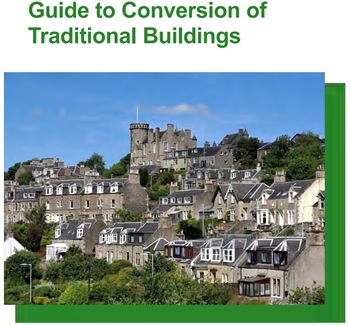
Guidance for conversion of traditional pre-1919 stone buildings.
Industrial heritage in the Ruhr
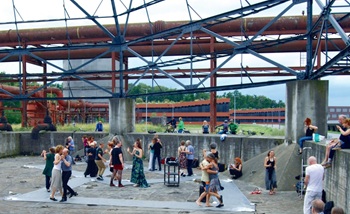
A marked difference to the fate of industrial landscapes in the UK.

Communities will be able to build their own clean energy.
Why diversity and inclusion matters for SMEs

CIOB’s D&I Charter shows how practical changes can support long-term growth.
Cut electricity bills to power growth

Coalition sends joint letter to the Chancellor.

Gasholders: a history in pictures. Book review.
Recognition, influence and growth

SocEnv identifies three strategic pillars in new strategy to 2045.
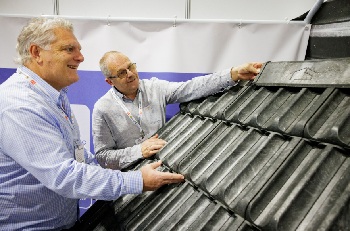
Discover the future of roofing, cladding and insulation.

New guidance for professional practice, cultural change and regulation in social housing.
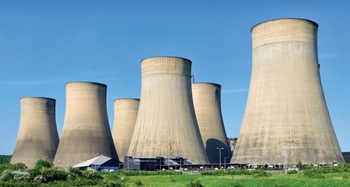
The heritage of nuclear and conventional power stations.
New measures to stop people being ripped off

Government to protect families from cowboy builders and aggressive bailiffs.

New Futurebuild showcase brings an innovation-first approach.
Comments
Found your article while researching different perspectives for an upcoming speaking engagement. Thanks for your insight and feel free to contact me if you have other ideas you'd like to share.
Here is a link to the speaking engagement in case you happen to be in San Francisco area.
http://www.aeccloud.com/2017/11/17/wes-smith-set-to-speak-as-aec-futurist-on-engtech-panel-at-the-future-of-money-and-technology-summit-san-francisco/